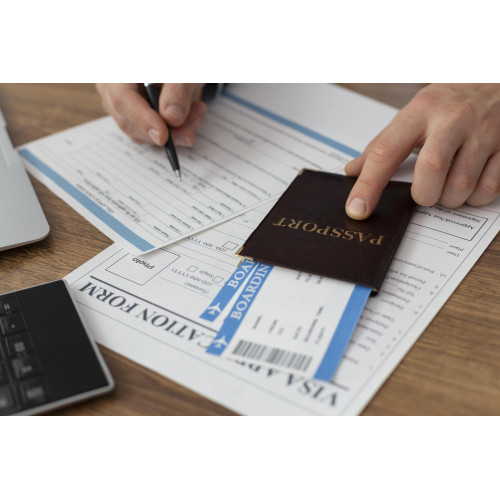
How to Avoid Common Mistakes When Applying for a Visa
Applying for a visa is always a time of excitement, anticipation, and hope. For many, it is a long-awaited opportunity to visit another country: to go on vacation, to study, for work, or to visit loved ones. But even the most carefully planned route can be at risk due to one minor mistake in the documents.
Unfortunately, practice shows that hundreds of applicants are rejected every day, making quite typical and often trivial mistakes when submitting documents. Many are sure: "Everything is fine with me, there is no risk of rejection." But the reality is harsher - even a person with an ideal visa history can be rejected. Sometimes the reason is inattention, lack of information, or incorrect interpretation of the consulate's requirements.
Consular officers evaluate each package of documents according to many criteria: reliability, completeness, logicality of the route, financial solvency of the applicant, ties to the homeland. Any inaccuracy in the application form, discrepancy in documents, lack of necessary certificates - and dreams of a trip are postponed indefinitely.
The visa officer evaluates your application comprehensively. He does not know you personally and sees only documents. It is based on them that the first impression of your reliability, solvency and purpose of the trip is formed.
Any inaccuracy may raise suspicions:
- Incorrectly indicated travel dates;
- Discrepancy in data in the application form and certificates;
- Lack of financial confirmation;
- Insufficient insurance;
- Unclear purpose of the trip.
Many countries exchange visa information with each other via the VIS and Interpol systems.
Even a single refusal can affect future visa applications. Consulates often issue a limited number of visas, and any mistake reduces your chances in favor of more carefully prepared applicants.
Accurate submission saves time and money
Errors lead to:
- Repeated payment of consular fees;
- New expenses for collecting certificates;
- Loss of paid reservations (hotels, tickets);
- Disruption of travel plans.
What does the correct submission of documents give:
- Increases the likelihood of a positive decision;
- Eliminates the need for additional requests;
- Protects against visa refusals in the future;
- Saves your money, nerves and time.
If you have doubts, it is always better to seek professional advice from agencies with experience in preparing visa documents. For example, specialists from Tourservice.com.ua will help you prepare documents taking into account all the requirements and features of the visa policies of different countries.
How can Tourservice help?
Tourservice provides professional assistance:
- Preparation of a full package of documents.
- Checking the application form before submission.
- Assistance in preparing for an interview.
- Consultations on complex visa cases.
Why choose us:
- More than 12 years of experience.
- High percentage of successful visa applications.
- Individual approach to each client.
- Useful tips for successfully obtaining a visa
Proper preparation is not only collecting documents, but also following a number of important rules that significantly increase the chances of obtaining a visa.
Below are practical recommendations that will help you avoid refusals.
1. Start preparing in advance. Do not put off preparing documents until the last days. Each consulate has its own deadlines for reviewing visa applications, and for some countries, appointments for submitting documents are scheduled weeks in advance. The sooner you start collecting documents, the more time you will have to check them and correct possible errors. This is especially important when applying for:
- Schengen visa,
- US visa,
- UK visa,
- work and student visas.
The recommended time to start preparing is at least 1.5–2 months before the intended trip.
2. Provide only reliable information. Any untruths in the application form or documents can be easily checked by visa officers through international databases (for example, Interpol and VIS). Inconsistencies in data will not only lead to a refusal, but can also create problems in the future when applying for visas to other countries. False information is one of the most common reasons for being blacklisted.
3. Do not skimp on health insurance. Medical insurance is a mandatory requirement of most consulates. The coverage amount must be at least 30,000 euros and cover all possible medical expenses and repatriation. Insufficient coverage or a dubious insurance company can lead to a visa refusal. It is better to choose reliable international companies working with visa centers.
4. Confirm financial solvency. Your financial documents must clearly demonstrate: · a stable income; · a sufficient amount in the bank account to cover all expenses during the trip; · no suspicious transactions. Not only the current balance is important, but also the movement of funds over the past months. Financial stability shows the visa officer that you are able to pay for the trip yourself and will not remain in the country illegally.
5. Maintain a clean visa history. Visa services carefully check the visa history of the applicant. If you have previously overdue visas, been deported, or violated visa regulations, this may negatively affect new applications. Even one violation can reduce the credibility of the applicant. Therefore: · adhere to the terms of stay; · do not violate entry regulations; · leave the country on time when the visa expires. A clean visa history is a big plus when considering an application.
6. Contact professionals. It can be difficult to understand all the nuances of visa legislation on your own, especially if you have:
- a complicated visa situation;
- a refusal in the past;
- a non-standard purpose of the trip (for example, an internship, a scientific conference, medical treatment abroad).
Professional visa agencies, such as Tourservice.com.ua, will help:
- collect the correct package of documents;
- complete the visa application form correctly;
- take into account all current requirements of a specific consulate;
- minimize the likelihood of refusal.
A professional approach is an investment in the success of your visa process.
Common myths about visas: what you shouldn't believe
Many applicants still believe in outdated or erroneous beliefs that only harm when submitting documents:
"The main thing is to show more money in the account." Financial solvency is important, but excess amounts without a logical explanation of their origin can raise additional questions.
"If they gave a visa before, they will give it this time too."
Each application is considered separately. Violation of visa rules in the past or changed circumstances may affect the decision."You can make a fake hotel or ticket reservation."
Modern consulates easily check the authenticity of reservations. Fake documents are a virtually guaranteed refusal and blacklisting."You can negotiate through friends at the embassy."
Any attempts to put pressure on the visa process are a direct path to a lifelong refusal.
By debunking myths, you save yourself nerves and reduce the risks of refusal.
Visa interviews: how to prepare and what to expect
If the type of visa requires an interview (for example, visas to the USA, Canada, Great Britain), it is worth understanding in advance what to expect:
- Prepare short and clear answers to questions about the purpose of the trip, plans and ties to the homeland.
- Be confident in the documents you have submitted - the visa officer can clarify any detail.
- Watch your behavior: clothing, look, confidence - everything matters.
- Do not memorize the answers - answer naturally, but to the point.
Remember: the purpose of the interview is to make sure that you are really going to the country for the stated purpose and will return on time. Visa pitfalls when applying on your own
Submitting on your own often results in refusals due to nuances that are not visible without experience:
- submitting the wrong type of visa;
- incorrect determination of the travel route;
- errors in document translations;
- submitting an incomplete set of documents.
To avoid such pitfalls, it is better to consult with specialists in advance.
The role of visa centers: when they are useful and when they are not
Visa centers are just intermediaries between you and the consulate:
Pros:
- They help with submitting documents.
- They provide logistics for the transfer of documents.
- They provide basic consultations.
Cons:
- They do not make decisions on visas.
- They are not responsible for the quality of your documents.
- They do not always provide full information about complex cases.
If your situation is non-standard, it is better to contact a professional visa company that will prepare a package of documents taking into account all the risks.
How does visa history affect emigration and future trips
Your visa history is a kind of "traveler's resume" that all consulates see when reviewing applications:
- Previously received visas to the USA, Canada, Schengen and Great Britain are a plus.
- Violations of the visa regime are a minus.
- Refusales are a reason for a more thorough check in the future.
When planning emigration or applying for a residence permit, a clean visa history also plays an important role.
Therefore, it is better to build your visa history competently and responsibly from the very beginning.
Psychological preparation for a visa interview. In addition to collecting documents, an interview at the consulate often becomes a source of additional stress for applicants. This is especially true for visas to the USA, Canada, Great Britain, Australia, and New Zealand.
But it is important to understand: the officer does not aim to refuse - his job is to make sure your intentions are honest.
To increase your chances:
- Be calm and confident.
- Avoid unnecessary emotions, nervousness, and sudden movements.
- Your calmness is a signal to the officer about the transparency of your goals.
- Think through your answers in advance.
- Imagine the questions they might ask: purpose of trip, length of stay, sources of income, connections to your home country, routes.
- Answer briefly and to the point. Don't give any extra information that you weren't asked for.
- Don't change your version of the answers.
- Any inconsistencies will raise additional suspicions.
- Tell only the truth.
- Officers have access to many international databases where all information can be easily verified.
- Even if you're worried, remember - your documents already say a lot about you.
- An interview is just a test of the logic and confidence in your words.
Peculiarities of document preparation for different countries
Although the principles of submitting documents are largely similar, each country has its own peculiarities that should be taken into account in advance.
USA
- Mandatory interview for most applicants.
- Maximum emphasis on financial stability, ties to the homeland and reasons for return.
- No need to provide medical insurance.
- The DS-160 form is one of the most voluminous and requires attention.
United Kingdom
- A detailed travel plan and financial expenses are required.
- Special attention is paid to the sufficiency of funds in the accounts.
- It is important to show the absence of immigration intentions.
- Supporting letters from employers, educational institutions, and family are a mandatory element.
Schengen (EU)
- Medical insurance with coverage of 30,000 euros is a strict requirement.
- Proof of route (tickets, hotels, invitation letters).
- A financial statement with the movement of funds for the last 3-6 months is required.
- Consulates often check the logicality of routes - overly complex or illogical trips raise questions.
Canada
- Remote submission without an interview is possible.
- The main focus is on financial capabilities and ties to the homeland.
- For student visas, a detailed study plan and proof of payment are important.
- Relatives living in Canada are checked separately.
These nuances should be studied even before you start collecting documents. Often, errors occur precisely because of ignorance of the specifics of a particular country. Typical errors in financial documents
Financial confirmations are one of the key elements of almost any visa application. Unfortunately, many applicants make critical mistakes here.
What often leads to refusals:
- Providing one-time large deposits without explaining the origin.
- Lack of movement of funds in the account - consulates pay attention to stability, not to a one-time balance.
- Statements from suspicious accounts or unverified banks.
- Indication of accounts for which deposits have recently been opened specifically for a visa.
- Transfers from electronic wallets, cryptocurrencies and other unstable sources.
How to prepare the perfect financial statement:
- Use a stable main checking account.
- Provide statements for at least the last 3-6 months.
- Show a stable income stream (salary, dividends, pensions).
- If you have assistance from relatives, attach documents confirming the legality of these transfers.
- Be sure to put the bank's seal and signature on each page.
- Financial documents should show not only the availability of money, but also its transparent origin.
When is it necessary to seek professional help
Although many people manage to cope on their own during a standard tourist trip, there are situations when professional help significantly increases your chances:
- You have previously been denied visas.
- You have a difficult family or financial situation.
- You are planning long-term education, internship, or treatment.
- Business visas with the participation of employer companies are required.
- You are not sure about the correctness of the translation and execution of documents.
- You do not have a stable visa history.
- An interview at the embassy of a difficult country (USA, Canada, Great Britain) is upcoming.
Competent advice from visa specialists will help not only to collect a complete package, but also to avoid many subtle mistakes that may not be noticeable to the applicant. Deep check of visa officers: how they "read" your documents
It is very important to understand: when reviewing your documents, consular officers do not simply tick boxes on a checklist. They analyze each item for logic, coherence, and reliability.
What officers analyze first:
- Compliance of personal data with documents.
- Even small discrepancies raise additional questions.
- Financial solvency.
- They look not only at the remaining funds, but also at the regularity of receipts, stability of income, and legality of sources.
- Travel route.
- How logical and reasonable is your route, hotel reservations, tickets, transfers.
- Connections with the homeland.
- Family, work, property, obligations - everything that confirms your intention to return home.
- Purpose of the visit. If the purpose is not convincingly justified, this increases the risk of refusal.
- Visa history. Violations of the visa regime, old refusals - everything is displayed in the database.
That is why a comprehensive analysis of documents is the most important part of preparing for a visa application. An error in one element can lead to doubts about the entire package. What documents strengthen the application
In addition to the standard requirements, there are a number of additional documents that can significantly increase your chances: Marriage certificates, birth certificates of children, family. They demonstrate your connection with your homeland.
- Certificates of ownership of real estate, cars. They confirm financial stability.
- Lease agreements, utility payments. They confirm the place of permanent residence.
- Certificates of income of the spouse. They strengthen the financial part of the application.
- Supporting letters from the employer. Indicating your stable employment and planned vacation.
- Old visas and marks on returning home. They show your visa discipline.
- The more complete and substantiated your application is, the higher the trust from the consulate.
The role of translation and legalization of documents
Many applicants underestimate the importance of correct translation and correct execution of official documents. Meanwhile, errors here are the cause of a significant number of refusals.
What is important to consider:
Translations must be done by professional translators.
Some countries require notarization of translations.
When applying to EU and Schengen countries, an apostille on the original documents is often required.
Translations must fully reflect the content of the originals - any simplifications or abbreviations are unacceptable. A poor-quality translation can create the effect of "fake" documents, even if the originals were in perfect order.
How consulates check the authenticity of documents
Modern visa services have fairly broad powers to check the accuracy of the data provided.
Main methods:
- Requests to banks about the authenticity of statements.
- Checking reservations through direct requests to airlines and hotels.
- Using international databases: Interpol, Schengen VIS, bank registries.
- Requests to civil registry offices and tax services.
- Reconciliation with migration databases of other countries.
It is important to remember: even minor discrepancies can be perceived by the consulate as a deliberate distortion of facts, which automatically leads to a refusal.
Strategy for submitting documents after the first refusal
If you have already faced a refusal, it is extremely important not to repeat the same mistakes when re-submitting:
- Fully analyze the text of the refusal and identify weak points.
- Prepare an explanatory letter, where you describe the corrected errors in a reasoned manner.
- Collect additional documents that were previously missing.
If necessary, consult with visa lawyers or agencies.
Re-submission of competently revised documents with strong arguments often ends in successful approval.
Tips for traveling to third countries for visas
Often, for example, citizens of Ukraine submit documents to other EU countries (Poland, Hungary, Lithuania) in order to obtain a visa. This approach also requires caution:
- Prepare a full package of documents, even if the consulate has lenient requirements.
- Be prepared for additional questions about the route.
- Make sure that the place of submission corresponds to the actual travel route (for example, the first entry is through the country of submission).
- Comply with the EU Visa Code.
An attempt to submit documents "where it is easier" without taking into account the actual route is a common reason for visa cancellation in the future. Submitting documents for a visa in the context of changing visa policies Many countries regularly update their visa rules.
In recent years, we have seen:
- tightening of visa controls for some countries;
- an increase in requests for additional documents;
- an expansion of visa information exchange programs between states.
That is why, even with previous successful experience of obtaining a visa, you should always focus on the current requirements of a specific consulate.
How visa policies of countries are changing in 2025: what is important to consider when submitting documents
Many applicants prepare a package of documents based on their previous experience or on the advice of friends. However, visa policies are constantly changing, and these changes directly affect the chances of obtaining a visa. This is especially true for citizens of Ukraine, given the political events of recent years.
Main trends of change:
1. Strengthening checks for immigration risks. Visa officers are increasingly paying attention to the following questions: will a person remain in the country illegally, will he exceed the period of stay, does he have real incentives to return to his homeland.
2. Tightening requirements for financial documents. Consulates increasingly require not only statements, but also income statements, tax returns, and asset ownership statements. A simple bank statement is no longer always perceived as sufficient proof of solvency.
3. Strengthening the interstate exchange of visa information. Thanks to the work of systems such as Schengen VIS, data on your past trips and visa violations is available to almost all EU countries, the USA, Canada, and Australia.
4. Personalized analysis of each application. The practice of a “standard package of documents” has practically disappeared. Even if your friends submitted one package and received a visa, this does not mean that the same set will be accepted from you. Each application is considered individually.
5. Increased number of additional requests from consulates. Even after submitting a complete package of documents, the applicant may be asked to provide additional certificates, confirmation of the route, or letters from employers.
What to do in such circumstances? Follow only official sources of consulates. Do not rely on outdated document collection schemes. In difficult situations, be sure to consult with specialists. Prepare documents as transparently and in detail as possible.
What documents are of particular interest and attention to visa officers
Visa services examine some documents with special attention, carefully analyzing every detail:
Certificate of income. Not only the amount, but also the stability of income is checked. Doubts are raised by a sharp increase in income immediately before applying for a visa. Inaccurate certificates from fictitious companies are a common reason for refusals.
Bank account statement.The presence of large one-time receipts without a logical explanation arouses suspicion. It is checked whether the financial movement matches the certificate of income. Consulates can verify the authenticity of documents through banking systems.
Confirmation of the travel route. The logic of the route is checked. A discrepancy between the hotel reservation and the actual route arouses suspicion. Overly complex schemes with the intersection of many countries are a potential "alarm signal".
Certificates of ownership of real estate and property. Confirm the connection with the homeland. Are an argument in favor of returning. The presence of real estate registered to the applicant significantly increases the credibility of his application.
Confirmation of marital status.Documents on marriage, birth of children, the presence of minor children, parents who need to be looked after - this is a strong argument in favor of returning.
Certificate of employment. Provokes questions if submitted fictitiously, with a short period of employment or without confirmation of the official registration of the company. Stable work over a long period of time is a significant plus.
Medical insurance. The compliance of insurance coverage with the requirements of the country is checked. The presence of unscrupulous insurers whose certificates are not recognized in EU countries is a reason for refusal.
These nuances often become decisive when making a visa decision. And if your situation is even slightly different from the “ideal” one, it makes sense to consult with specialists in advance to take into account all potential risks. Submitting documents for a visa is not a simple formality, but a serious legal and bureaucratic procedure, the accuracy of which determines the fate of your trip.
Modern visa centers and consulates carefully check all information, financial history, routes and purpose of the trip. An error in one document or an inaccuracy in the application form can cost months of waiting, refusals and financial losses.
Competent preparation is:
- full compliance with the requirements of a specific country,
- reliable information in all documents,
- transparent financial confirmations,
- logical travel route, readiness for an interview.
Don't be afraid to seek professional support - experienced specialists know all the pitfalls of visa procedures and will help you prepare a package of documents in the highest possible quality to significantly increase the likelihood of visa approval the first time. The higher the quality of preparation, the easier it is to get the coveted visa and calmly enjoy the trip.
Preparing to submit documents for a visa requires responsibility and attention to detail. Even a small mistake can result in a refusal. Follow our recommendations, carefully check the documents and do not hesitate to contact professionals. Tourservice.com.ua is always ready to help you go through the visa process with minimal risks and maximum chances of success.