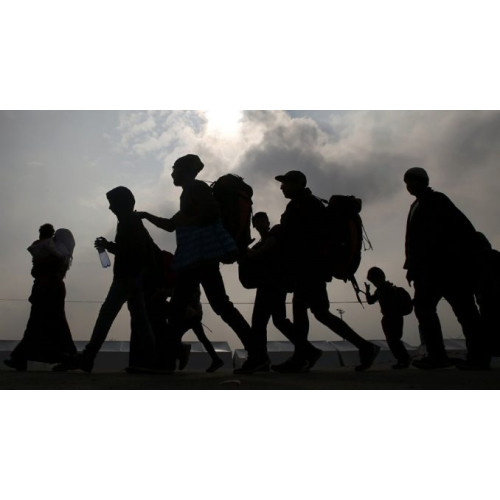
Temporary Protection and Asylum: Overview and Visa Application
In today's world, political and economic instability, armed conflicts, natural disasters, and widespread human rights violations force millions of people to seek ways to leave their countries in search of safety. Temporary protection and asylum are two essential legal mechanisms that allow those affected by persecution, wars, and other hardships to obtain legal status abroad. However, these procedures can seem complex and confusing: each country establishes its own rules, requirements, and application processing times.
In this article, we will take an in-depth look at what temporary protection and asylum are, how to determine which program is right for you, the main requirements, and the necessary documents. We will also analyze the features of obtaining a visa under temporary protection programs and provide a step-by-step guide for those seeking refugee status. If you have additional questions during your research or need professional assistance, contact us—our team is ready to provide expert support at every stage.
What is Temporary Protection and How Does it Differ from Asylum?
Before starting to collect documents and submit applications, it is important to clearly understand the difference between temporary protection and refugee status (asylum). While both mechanisms aim to protect individuals forced to flee their homeland, there are fundamental differences between them.
Essence of Temporary Protection
Temporary protection is an emergency measure introduced by a state (or group of states) in situations of mass influx of people. It is most often provided to those fleeing war, large-scale humanitarian crises, or natural disasters. The main goal is to quickly offer safe shelter without delving into individual assessments of each applicant.
- Duration: Temporary protection usually lasts from one to three years, with the possibility of extension if the crisis in the country of origin remains unresolved.
- Simplified Procedure: In cases of mass influx, competent authorities simplify the review process to quickly accommodate refugees.
- Limited Rights: Individuals under temporary protection typically have the right to reside, access healthcare, and education. However, opportunities for long-term integration may be restricted.
Asylum (Refugee Status)
Asylum is a legal status based on the 1951 Geneva Convention and the 1967 Protocol, involving a more thorough and individual assessment of the dangers a person faces.
- Individual Assessment: To obtain refugee status, one must prove "well-founded fear of persecution" based on race, religion, nationality, membership in a particular social group, or political opinion.
- Long-Term Perspective: Upon a positive decision, refugees gain the opportunity for long-term residence, family reunification, and the prospect of naturalization.
- Complex Procedure: Applying for asylum involves interviews with migration authorities, collecting evidence of persecution, and verifying the credibility of the applicant's story.
Thus, temporary protection focuses on rapid response during a mass crisis, while asylum involves a detailed review of the applicant's individual situation.
Historical Background and Legal Framework
Understanding the historical context helps to grasp why these mechanisms exist today. After World War II, the international community recognized the need to protect individuals fleeing persecution. In 1951, the Convention Relating to the Status of Refugees (Geneva Convention) was adopted, which established the legal framework for defining "refugee" and set out principles of non-refoulement.
The concept of temporary protection developed later, in response to the mass refugee flows during regional conflicts (e.g., the breakup of Yugoslavia in the 1990s). The European Union adopted the Temporary Protection Directive (2001/55/EC) to more effectively manage unexpected mass arrivals. This mechanism allowed for rapid issuance of residence permits and minimized bureaucratic delays during migration system collapses.
Who Qualifies for Temporary Protection or Asylum?
Categories Eligible for Temporary Protection
- Refugees from Conflict Zones: A classic example includes citizens affected by armed conflicts.
- Victims of Humanitarian Disasters: This category includes large-scale natural disasters (earthquakes, hurricanes) or major technological accidents.
- Mass Flight Due to Political Reasons: When a regime in a country becomes repressive and persecutes the population on a large scale, people may seek temporary refuge abroad.
Categories Eligible for Asylum (Refugee Status)
- Individual Persecution: Proof is required that you are being persecuted based on race, religion, nationality, political opinion, or membership in a particular group (e.g., LGBTQ community).
- Fears for Safety: It is not necessary to have a court order or an arrest warrant—there must be real grounds to believe you would face danger upon return home.
- Additional Protection (Humanitarian): Some countries provide a form of asylum to people who cannot be deported for reasons not fitting classic criteria (e.g., humanitarian grounds).
How to Determine Which Program is Right for You?
If you are in a country where a collective temporary protection program has been announced (due to war or natural disasters), it is often easier and faster to apply for it. This program is designed for those who are forced to flee en masse and cannot wait for the lengthy asylum procedure.
However, if you have clear and personal grounds for asylum—such as being a political activist whose rights have been systematically violated—it might be reasonable to follow the path of asylum from the beginning. This option is more complex but provides broader rights and prospects for permanent integration.
Steps for Applying for a Temporary Protection Visa
Suppose a government has announced a temporary protection program in response to a crisis in your country. To obtain the corresponding visa, you usually need to:
- Monitor official sources. The government announces the program, publishes instructions, and specifies the categories of citizens eligible for it.
- Submit an application to the consulate or migration center. The application may be simplified, especially in cases of collective acceptance.
- Provide the necessary documents: passport, birth and marriage certificates (if applicable). You may also need to show evidence of being in the conflict or war zone.
- Undergo a basic interview (in some cases). This is often a formality: the government checks whether you belong to the target group.
- Wait for a decision. Processing times depend on the number of applicants and the capacity of migration services.
Example: Temporary Protection Program in the European Union (Post-2022)
In 2022, the EU activated the Temporary Protection Directive for Ukrainian citizens fleeing the war. This allowed hundreds of thousands of people to quickly obtain residence permits in EU countries, access the labor market, and receive social services without the lengthy traditional asylum procedure.
Asylum Application Procedure (Refugee Status)
The asylum application process is broadly similar in many countries, although details may vary:
- Arriving in the country. Most often, an asylum application is filed within the territory of the country, although some nations allow applications to be submitted at consulates abroad (very rarely).
- Initial registration. You are registered as an asylum seeker and issued temporary identification.
- Official application and interview. You complete forms, attach evidence of persecution, and undergo one or more interviews.
- Case review. Migration authorities analyze materials and check the consistency of your information.
- Decision. If the outcome is positive, you receive refugee status or another form of international protection. If denied, you can appeal the decision.
Importance of Legal Support
Without competent legal assistance, many applicants make mistakes: failing to gather evidence, being inconsistent in their statements, or misunderstanding legal nuances. Experts recommend seeking help from specialists who can build a strong case.
Common Challenges and Mistakes in Submitting Applications
- Insufficient evidence base. Some people assume that a verbal statement of persecution will suffice. In practice, documents such as court summonses, extracts, witness statements, and press articles are required.
- Document discrepancies or errors. Applicants often cite one date, while a different one is listed in their passport, causing migration authorities to distrust their claims.
- Deliberate falsehoods. Attempts to "fabricate a story" are usually uncovered quickly: interviewers are trained to spot inconsistencies and verify claims through databases.
- Missed deadlines. In some countries, asylum applications must be submitted within a specific period after entry. Delays reduce the chances of approval.
Tip: Research the rules of the specific country in advance and try not to violate them to avoid complicating your case.
What Support Do Governments Provide to Those Under Temporary Protection or Asylum?
Social Support for Temporary Protection
- Provision of housing or temporary accommodation in special centers.
- Access to basic healthcare and schooling for children.
- Permission to work (depends on national legislation).
- Eligibility for certain social benefits (rarely, depending on the country's budget).
Rights of Refugees
- Opportunities for long-term residence and even permanent residence (PR).
- Family reunification: spouses, children, and sometimes parents can join you.
- Right to work without additional permits (in most countries) and access to all social services.
- Prospect of naturalization after several years of legal residence.
Thus, asylum provides a stronger legal basis in the long term, while temporary protection is more of an emergency measure.
Financial Aspects and Taxes
Few people consider that after obtaining temporary protection or asylum, tax residency issues may arise. If you start living and working in a new country, you may need to pay taxes there. This can have significant implications for personal finances and legal obligations.
- Employment: Legal employment may involve paying taxes and social contributions.
- Entrepreneurial activity: Some refugees or those under temporary protection start small businesses. Check whether you have the right to engage in entrepreneurial activities and how they will be taxed.
- NGO assistance: Non-governmental organizations often help with employment and provide tax consultation.
Psychological Aspects of Migration and Adaptation
Obtaining refugee status or temporary protection is only the initial step. The next challenge is adapting to a new culture, language, finding housing, and employment. Many face emotional stress caused by forced migration.
- Language Barrier: Even if the country speaks English, a certain level of proficiency is necessary for comfort.
- Cultural Differences: Different traditions, customs, and social norms.
- Social Isolation: The absence of friends and acquaintances can lead to feelings of loneliness and depression.
Various community organizations, religious groups, and volunteer initiatives often help refugees and those under temporary protection integrate. It is recommended to seek such support groups to accelerate the adaptation process.
Myths and Stereotypes About Refugees
- "Refugees live off the state." In practice, many strive to find employment as soon as possible and support themselves, as state benefits (if any) are usually minimal.
- "An influx of refugees increases crime rates." Statistical research by organizations like UNHCR often shows that migrants are no more prone to committing crimes than the local population.
- "Asylum leads to instant citizenship." No, most refugees must reside in the country for several years before they can apply for citizenship.
International Cooperation and the Role of the UN
Today, migration processes and asylum issues are coordinated by numerous organizations and agreements. The United Nations High Commissioner for Refugees (UNHCR) plays a central role in protecting refugee rights, acting as an intermediary between countries, offering resettlement programs, and providing humanitarian aid.
The International Organization for Migration (IOM) is also important in managing mass displacements and implementing special programs (e.g., voluntary repatriation if the situation in the country of origin improves).
Should You Consider Private Immigration Agencies?
Some people choose to apply independently, while others turn to private immigration agencies. It is essential to understand that not all agencies are reliable: some may be fraudulent, promising "guaranteed results." Only official authorities can guarantee an outcome.
However, a reputable agency or law firm can significantly ease the document preparation process, schedule appointments with officials, and help avoid errors in applications. The key is to verify their reputation and clearly understand your rights and obligations.
Comparison Table: Temporary Protection vs. Asylum
| Parameter | Temporary Protection | Asylum |
|---|---|---|
Legal Basis |
National laws and directives (e.g., EU Directive 2001/55/EC) |
1951 Geneva Convention and additional protocols |
Scope of Rights |
Access to basic social services, healthcare, often limited access to the labor market |
Full rights, including employment, family reunification, pathway to PR and citizenship |
Target Audience |
Mass movements of people fleeing wars, natural disasters, or major crises |
Individual cases of persecution based on race, religion, nationality, or group affiliation |
Procedure Complexity |
Relatively low (collective processes, simplified requirements) | High (individual review, evidence of persecution required, interviews and checks) |
Duration of Status |
Temporary: 1–3 years, extendable if the crisis persists |
Usually long-term, effectively indefinite, though periodic reviews are possible |
Voluntary Departure Option |
People may return if the situation in their home country improves |
Decision rests with the refugee; many prefer to stay and integrate |
Examples of Application |
Reception of refugees from Ukraine during the conflict; Syrian refugees in EU countries |
Asylum for opposition figures, dissidents, journalists facing threats |
Practical Tips for Protection Seekers:
- Gather evidence in advance. Even if you are unsure whether you will apply for asylum, bring all documents proving danger in your home country.
- Do not neglect medical assistance. If you have injuries or illnesses resulting from persecution or military actions, obtain medical certificates—they can serve as critical evidence.
- Respect local laws. Violations of visa regulations or illegal border crossings complicate the process of obtaining status, although they may sometimes be justified in emergencies.
- Be prepared to wait. Processing times for applications can be lengthy, especially if the immigration system is overwhelmed.
- Stay in touch with human rights organizations. NGOs can provide free legal advice, translation assistance, and moral support.
Where to Find Additional Information?
- Official websites of immigration services in specific countries (e.g., USCIS for the USA or the Ministry of Internal Affairs of an EU country).
- Websites of international organizations: UNHCR, IOM.
- Human rights NGOs: Amnesty International, Human Rights Watch, and others regularly publish reports on situations in various countries.
The Importance of Professional Consultation
When it comes to sensitive issues like temporary protection and asylum, legal consultation can play a decisive role. Mistakes in filing documents, incorrect phrasing, or inaccurate translations of evidence can lead to rejection. Qualified experts can help:
- Determine precisely which legal mechanism (temporary protection or asylum) applies to your situation.
- Gather and structure evidence to convince immigration authorities.
- Assist you during interviews or in court proceedings when appealing a denial.
If you are seeking professional help, Contact Us. Our team understands the intricacies of immigration law and is ready to offer tailored solutions.
Conclusion
Temporary protection and asylum provide a chance for people in critical situations to start a new chapter in a safe and stable country. Despite the seemingly complex bureaucratic procedures, hundreds of thousands of people successfully obtain these statuses and integrate into new communities each year. The key is thorough preparation, compliance with rules, and remembering that each case is reviewed individually.
Get advice from our experts to avoid mistakes at key stages!
We provide comprehensive support: from the initial analysis of your situation to obtaining a visa or protection status.
Contact us today to secure a safe way out of dangerous circumstances and a path to a peaceful future for yourself and your family.